
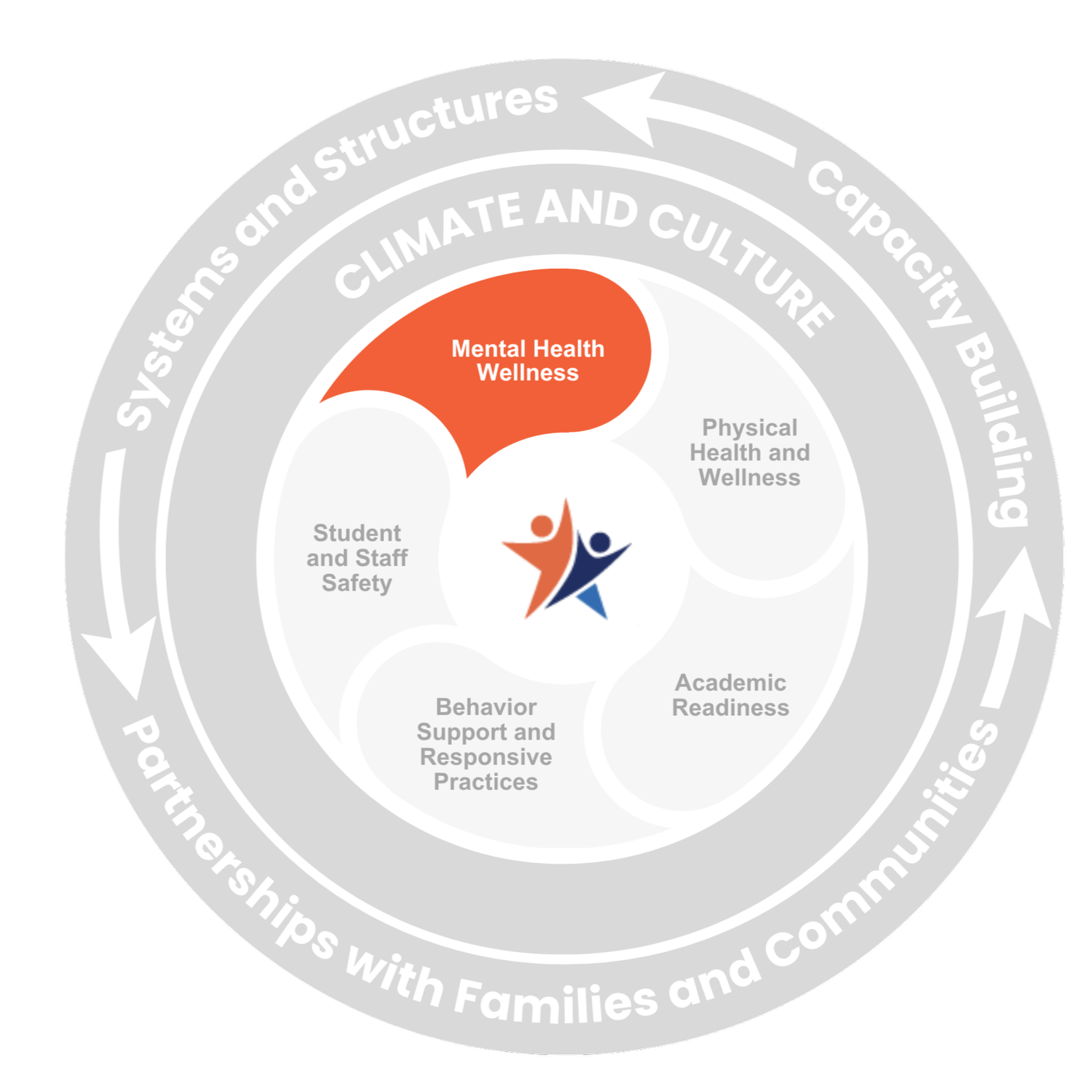
SSF Lever 1:
Mental Health Wellness
School mental health wellness refers to the comprehensive approach to promote emotional well-being, prevent substance use, intervene in crisis situations, prevent suicide, and raise awareness about mental health and substance use challenges among students and staff. This approach integrates evidence-based practices aimed at fostering positive social, emotional, and behavioral development among students. It involves a supportive school environment, implementing policies and procedures that address mental health needs, providing access to resources and interventions for students experiencing difficulties, and collaborating with families and community stakeholders.
-
Employ promotion and prevention strategies as a proactive step toward mental health wellness
Key Practice 1.1.1: Universal Skill-building
Teach social and personal skills.
Key Practice 1.1.2: Mental Health Instruction
Teach students about mental health and strategies for help-seeking.
Key Practice 1.1.3: Substance Misuse Instruction
Teach staff and students about substance misuse.
Key Practice 1.1.4: Best Practices and Prevention
Incorporate recognized best practices and proactive prevention in areas such as trauma-sensitive schools and grief-informed care.
Key Practice 1.1.5: Create a Network of Resources
Create a network of local and community resources for students experiencing mental health concerns.
-
Equip staff with the knowledge and tools necessary to comprehend and care for their mental health
Key Practice 1.2.1: Well-being Assessment
Assess staff mental health and well-being.
Key Practice 1.2.2: Mental Health Literacy
Equip staff with the knowledge and skills for recognizing and addressing mental health concerns.
Key Practice 1.2.3: Culture of Well-being
Build a campus culture that encourages the mental health and well-being of all staff.
-
Identify and screen for potential mental health concerns
Key Practice 1.3.1: Recognizing Student Concerns
Train all staff to actively observe student behavior in order to recognize potential mental health concerns.
Key Practice 1.3.2: Universal Screening
Use optional universal screeners to identify potential mental health concerns.
Key Practice 1.3.3: Effective Referral Procedures
Connect students to mental health supports.
-
Provide a readily accessible system of support services for those navigating mental health challenges
Key Practice 1.4.1: Tier 2 and Tier 3 Interventions
Implement services and supports for students with mental health needs.
Key Practice 1.4.2: Mental Health Resources
Provide information and resources to families.
Key Practice 1.4.3: Standard Crisis Protocols
Use established school system protocols to respond to mental health crises, including suicidal ideation.