
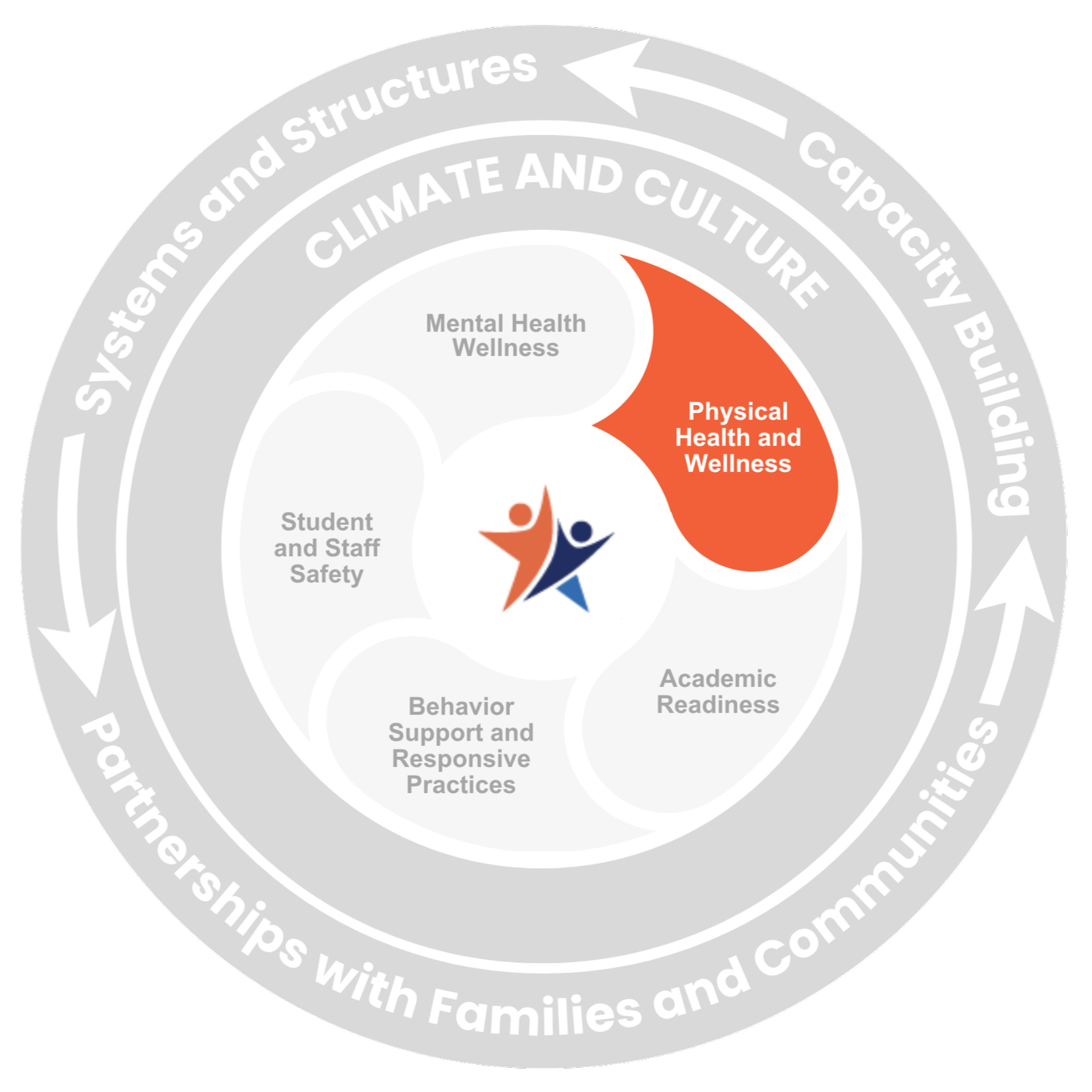
SSF Lever 3:
Physical Health and Wellness
Physical health and wellness refers to the maintenance of a person’s well-being through health and fitness activities. It includes attention to various aspects of physical health to achieve a balance of healthy habits and lifestyle, ensuring basic needs are being met, and providing students and staff with the tools and knowledge necessary to develop lifelong healthy habits.
-
Connect students and staff to school and community resources that promote physical health
Key Practice 3.1.1: Meeting Basic Needs
Ensure all students' basic needs are met through a consistent system of support. The school connects students and their families or guardians with resources to meet basic needs (e.g., shelter, food, clothing).
Key Practice 3.1.2: Resource Mapping
Actively seek out and share options for community resources. The school conducts, maintains, and utilizes a resource map to provide access to appropriate community partners and resources.
-
Intentionally design campus and classroom schedules to incorporate opportunities for student play and physical movement
Key Practice 3.2.1: Physical Exercise
Provide opportunities for active play and movement throughout the day.
Key Practice 3.2.2: Classroom Physical Activity
Embed physical activity in classroom time. Students experience daily opportunities for physical activity within the classroom.
-
Implement health and nutrition programs that encourage healthy behaviors in students
Key Practice 3.3.1: Healthy Practices Curriculum
Incorporate age-appropriate education on nutrition, healthy habits, and lifestyle. The school provides a curriculum and classroom time for student instruction on physical health, including the importance of proper nutrition, exercise, sleep, and hygiene, while teaching the physiological and mental health benefits of regular physical activity.
Key Practice 3.3.2: School Meals and Safe Water
Provide healthy nutrition and safe drinking water for students.